Keith Haring’s Radiant Baby: The Symbol That Lit Up New York and the World

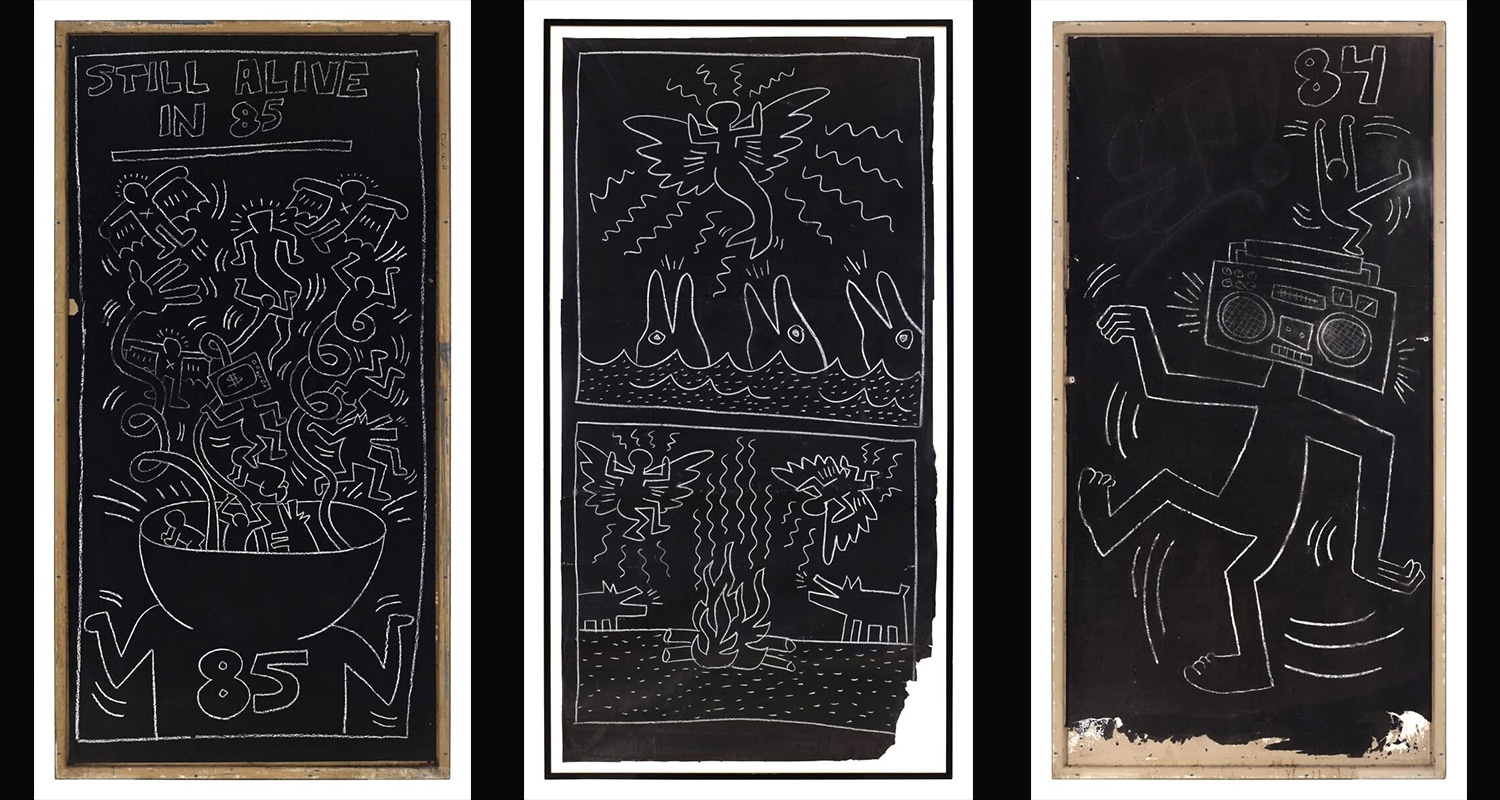
In the early 1980s, something magical started appearing on the black advertising panels of New York City subway stations. Amid the noise, grime, and rush-hour crowds, a simple white-chalk figure kept showing up: a crawling baby surrounded by bold, radiating lines of energy.
That figure was Keith Haring’s Radiant Baby - and it would become one of the most recognizable and beloved symbols in modern art.
Who Was Keith Haring?
Keith Haring (1958–1990) was an American artist, activist, and cultural force whose work exploded out of the downtown New York scene of the 1980s. Born in Reading, Pennsylvania, he moved to New York to study at the School of Visual Arts but quickly found the streets more inspiring than the classroom.
He began drawing in the subway in 1980, using white chalk on the empty black panels left by expired ads. These “subway drawings” were fast, public, and democratic - art made for everyone, not just gallery visitors. Within a few years, Haring had gone from unknown street artist to international star, collaborating with everyone from Andy Warhol to Madonna while using his work to fight for gay rights, AIDS awareness, and against apartheid and drug abuse.

The Birth of the Radiant Baby
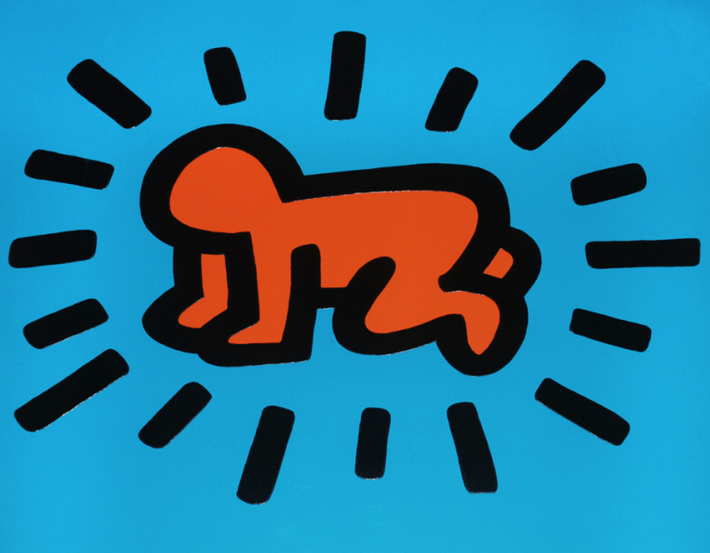
The Radiant Baby first appeared as Haring’s personal “tag” in the subway. He later explained that the image represented “the purest and most positive experience of human existence.”
It wasn’t just a cute baby — it was energy made visible. The radiating lines suggest light, sound waves, or pure life force bursting outward. For Haring, the baby stood for innocence, potential, hope, and the universal spark that exists in every human being before the world complicates things.
One story suggests the image first appeared on his childhood bedroom wall, drawn with a gold paint pen. But it was in the New York subways that it truly came alive and began speaking to millions.
What the Radiant Baby Really Means
Haring’s own words capture it best: the Radiant Baby symbolized youthful innocence, purity, and goodness. It was a universal sign of new beginnings and unfiltered human potential.
In a decade defined by the AIDS crisis, Cold War anxiety, and social upheaval, the Radiant Baby offered something rare — optimism without naivety. It was joyful but not frivolous. Simple but profound. It became Haring’s visual signature, appearing in paintings, sculptures, murals, and the merchandise he sold at his Pop Shop (opened in 1986 so that regular people could afford his art).
From Subway Walls to Museums and Beyond
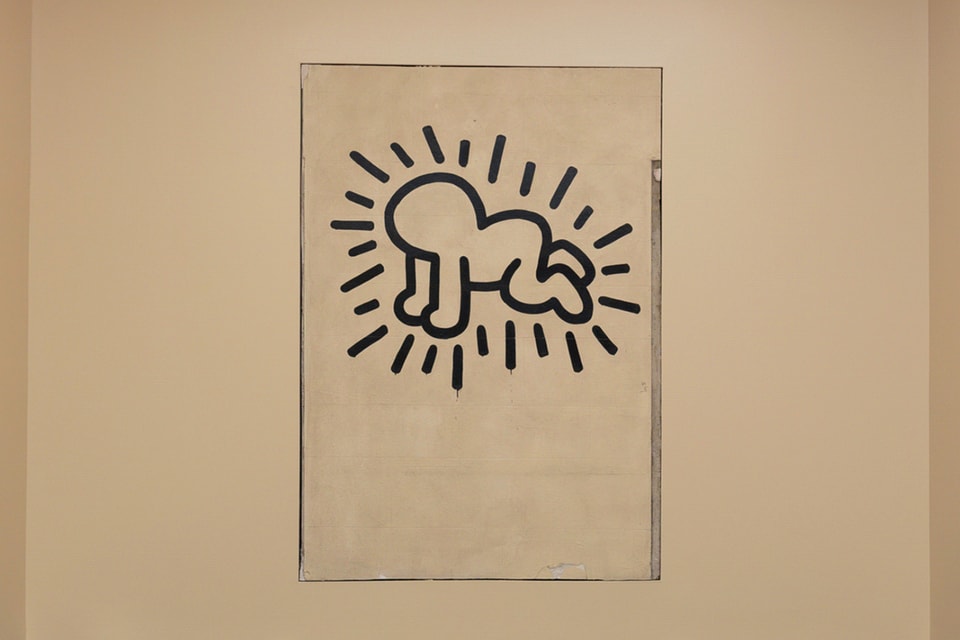
Haring didn’t keep the Radiant Baby locked in galleries. He scaled it up for massive murals (including one at Grace House in New York) and wove it into dense, colorful compositions filled with his other iconic motifs — barking dogs, dancing figures, UFOs, and angels.
His style was instantly recognizable: thick black outlines, flat bright colors, and an incredible sense of movement and energy. Whether the baby appeared alone or surrounded by chaos, it always felt like a beacon of light.
A Legacy That Still Radiates
Keith Haring died of AIDS-related complications in 1990 at just 31 years old. Before he passed, he established the Keith Haring Foundation, which continues to support AIDS organizations, children’s programs, and art education around the world.
Today, the Radiant Baby lives on far beyond museums. You’ll find it on t-shirts, sneakers, skateboards, and street art worldwide. It has become a universal emoji of hope, energy, and creative life force — exactly what Haring intended.
In a world that often feels heavy, Haring’s Radiant Baby still reminds us of something essential: the purest form of human existence is full of light, movement, and possibility.